

ai video is a slot machine — until you decide something
The pull-the-lever criticism of AI generation is accurate — for one-line prompts. Type six words, press enter, and you cannot predict the result because you did not decide anything. The fix is not less uncertainty. It is more intent: narrow the outcome to a set you would accept, then delegate the rest on purpose. nixm is built around that order — compose the shot, then spend the render.
The criticism is correct
Every few weeks someone points out that AI image and video tools are slot machines, and they are right. You put something in, you do not know what comes out, and occasionally it is wonderful. That is a variable-ratio reward schedule, the most habit-forming payout structure known, and it is the same one that makes gambling difficult to walk away from.
Anyone who has generated forty clips in an evening and kept two recognises the feeling. The forty were not work. The forty were pulls.
What actually makes it a pull
Here is the part the criticism usually skips: it is only true when you have not decided anything.
Type "a woman in a subway station at night" and you genuinely cannot predict the output — not because the model is a slot machine, but because that sentence contains almost no decisions. Is she close or far? What lens? Is the light overhead and green, or coming from the tunnel? Is she waiting, leaving, or hiding? You did not say. So the model chose, and you are finding out what it chose. That is the definition of a pull: an outcome you have no stake in shaping.
Uncertainty is not the problem
The instinctive fix is to try to eliminate the surprise — longer prompts, more parameters, more control, until the render is exactly the thing in your head. That is the wrong target, and chasing it produces stiff, over-specified footage that looks like a description rather than a shot.
The better move is to narrow the outcome space until every result inside it is one you would accept, and then deliberately delegate what remains. Name the subject, the framing, the light, the motion, the sound. Leave the rest. What comes back is not random — it is the part you chose not to determine.
A director does not know what the actor will do on take three. That is not gambling. That is working with something that has its own ideas, having first built a frame tight enough that its ideas land somewhere useful.
One question tells you which one you are doing
Before you spend the render, ask: what would make this a failure?
If you can answer — wrong time of day, she reads as angry instead of tired, the camera moves when it should be locked — you are directing. You set a standard and you will be able to tell whether it was met. If you cannot answer, you are pulling, and you will judge the result by whether you happen to like it. That is the whole difference, and it costs nothing to check.
Where slop comes from
Slop is not a model failure. Models produce what they are asked for, and the ceiling rises every few months. Slop is what accumulates when nobody decides anything and nobody throws anything away — volume produced without a standard to fail against.
Which means the two habits that prevent it are the same two that make the work good: decide before you spend, and be willing to reject a render you paid for. Both are unfashionable, because both are slower than pulling again.
The anticipation is the good part
None of this argues for removing the wait. Those two minutes while a clip renders are genuinely exciting, and they should be.
But notice which version of the feeling you are having. "What will it give me" is the lever. "Did the thing I imagined survive contact with the render" is something older — it is what dailies have always felt like, what a darkroom felt like, what waiting on a lab to call felt like. Same anticipation, entirely different relationship to the outcome. One is hoping to be given something. The other is finding out whether you were right.
Try deciding first
nixm composes the shot with you before anything is spent — the frame is approved, then it moves. Related: cinematic prompt examples, why AI videos look bad, and making videos by chatting.
Direct a scene in the cinematic studio — first HD video with sound is free.
frequently asked
Is AI video generation really like gambling?
The reward structure is the same — unpredictable payoff on repeated attempts — and that is worth taking seriously. But it only holds while you are not deciding anything. Specify the shot and the uncertainty becomes delegation rather than chance.
Should I write longer prompts then?
Longer is not the goal; more decided is. A short prompt that names the subject, the framing, the light and one movement beats a paragraph of adjectives. Over-specification produces stiff footage that looks like a description read aloud.
What should I deliberately leave to the model?
The texture — how the light falls, how a coat moves, the small things you would have to be a cinematographer to specify. Delegate what you would happily be surprised by; decide what you would be annoyed to get wrong.
How do I know if I am directing or just pulling?
Ask what would make the render a failure. If you can name it, you are directing. If you cannot, you will judge the result by whether you happen to like it, which is the definition of a pull.
Is AI slop the model's fault?
Mostly not. Slop is what accumulates when nothing is decided and nothing is discarded. The habits that prevent it — deciding before spending, rejecting renders you paid for — are older than the tools.
Can I try it free?
Yes — nixm includes one free HD video with sound on a new account, no card required.
nixm — where this gets tested. the shot is composed with you before anything is spent.
open the studio →Enter your email and receive a link to sign in. No passwords, just a secure signal to connect.
why connect
- 20 free credits to start
- your signals, remembered
- buy more credits anytime
- image & video generation features
two signals. one mind.
most AI starts every conversation from zero. you arrive, explain yourself, refine, re-refine, watch the model drift back to defaults. five messages to reach one good answer. ten more to keep it on track.
nixm™ flips that. every nixm has two signals primed before you ever arrive — an intent signal that holds the mission, and a collab signal that holds the settings.
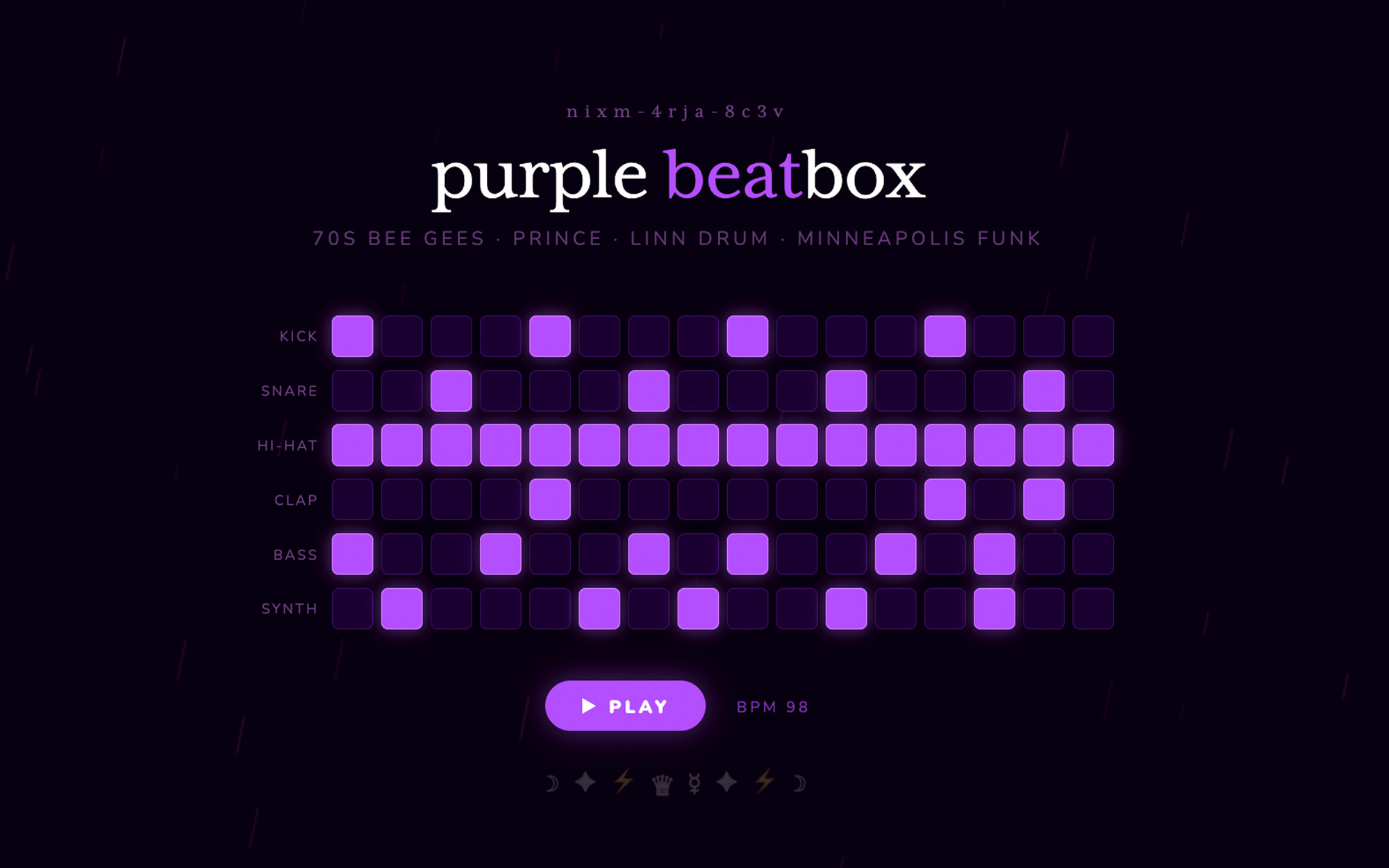
intent is what you're trying to make. build a beatbox. write a brand brief in editorial tone. visualize photosynthesis in 3d. that signal is locked from the moment the URL loads.
collab is everything else — constraints, voice, references, what to avoid, what to lean into. it's the producer's notes. the model isn't reading them when you arrive. they were already in the room.
you say one thing. nixm™ answers refined.
this is the difference. not the model — the model is interchangeable. the difference is that nixm™ hands the model a primed signal, not a blank room.
recent unlocks.
capabilities that surfaced from the lab. fresh frequencies, freshly tuned.
cinematic studio
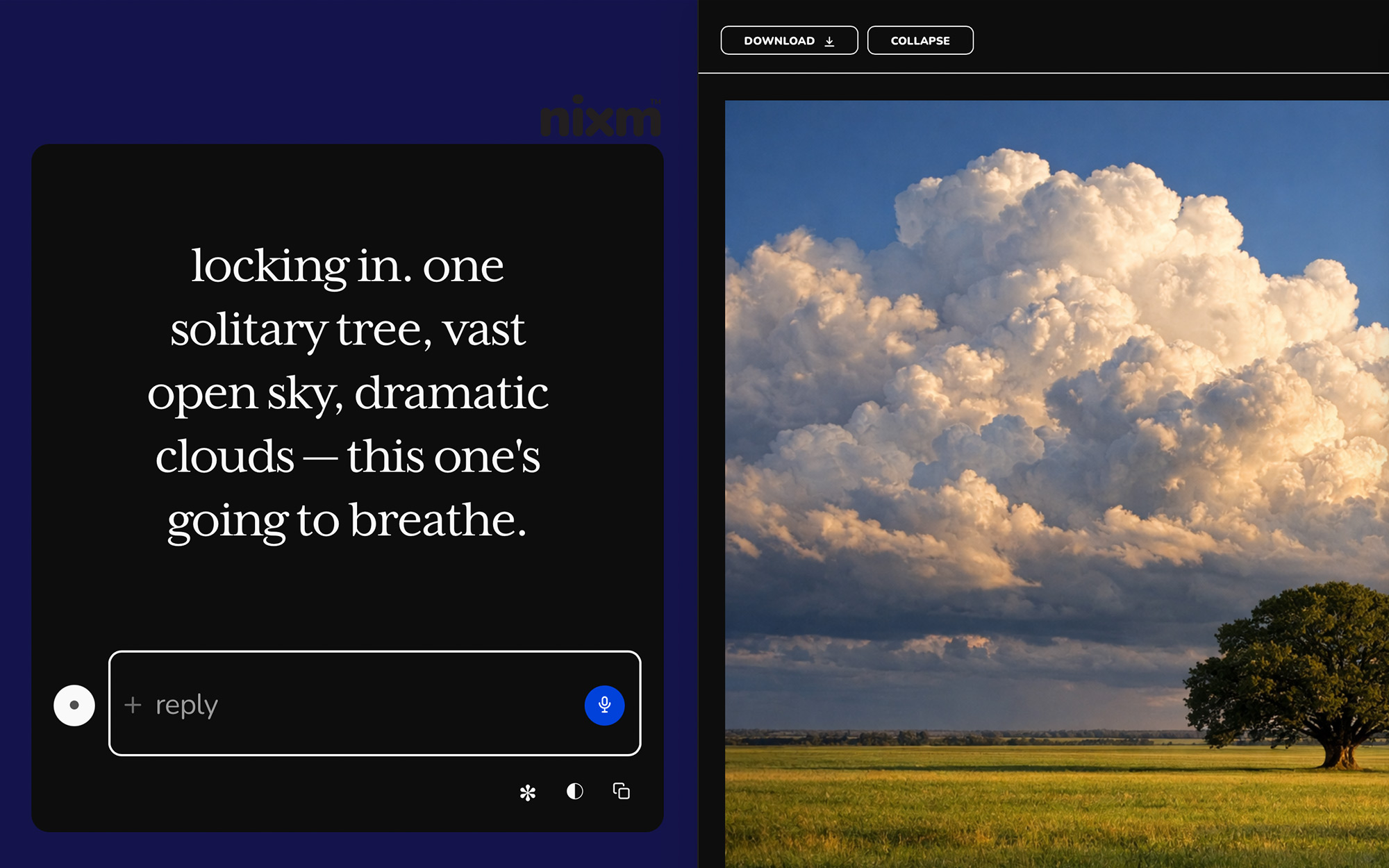
direct a single unforgettable frame. tell nixm a fragment — a character, a mood, a moment you half-see — and it casts the scene with you: lens, light, motion, the decisive instant. when the frame lands, set it in motion as a short clip. you bring the spark. nixm directs.
extend
eight seconds is where the shot starts, not where it ends. every finished clip now carries an EXTEND button — one press and the same shot carries on for about seven more seconds, one credit, no plan to join. press it again if it's still going somewhere. we cut the join down to about two tenths of a second by telling the model what it must not change; the writeup is in what extending a clip really does.
video gen
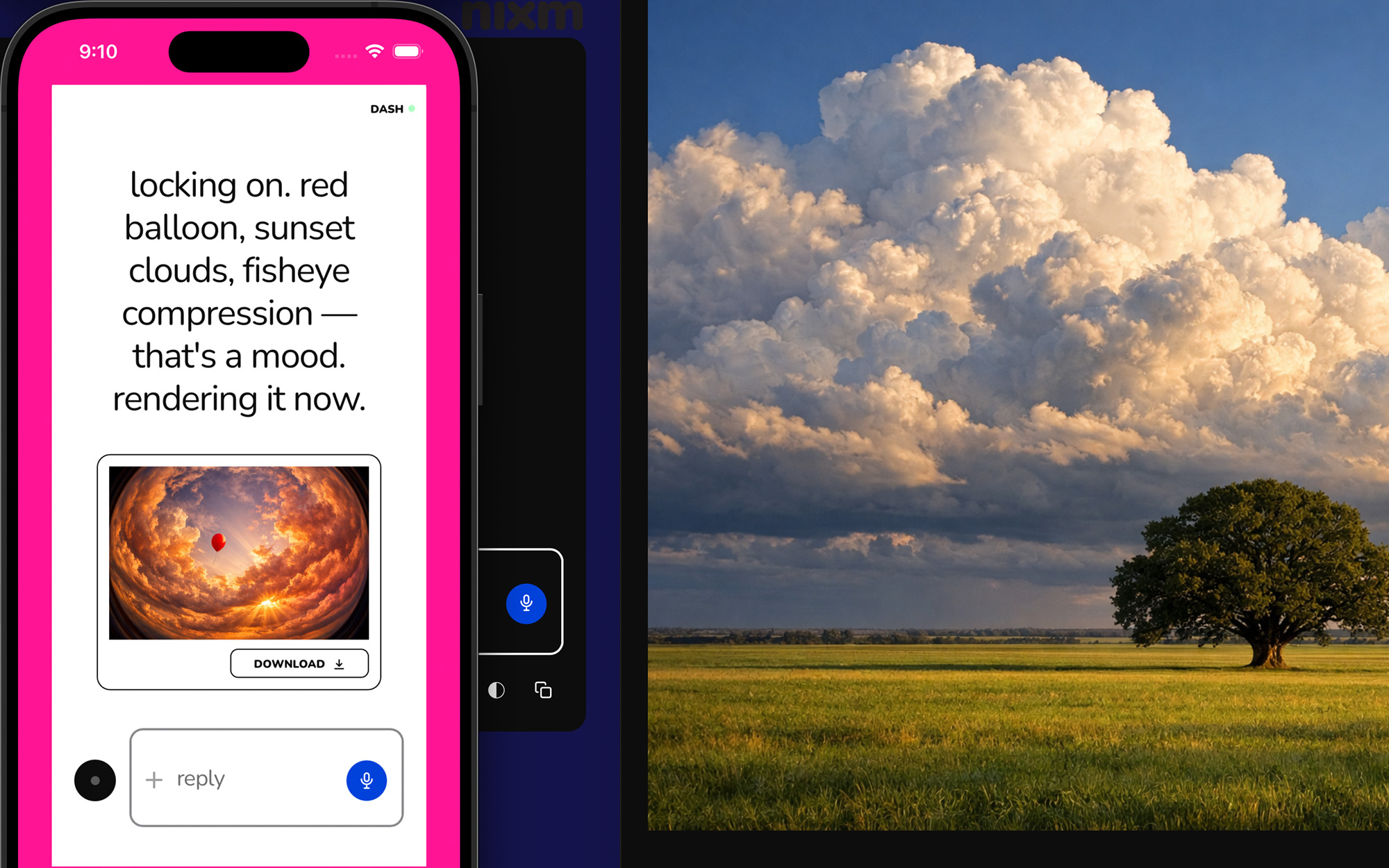
ask for a video, get a video. eight seconds, with sound — dialogue, score, and ambience in one pass. inline on mobile, side panel on desktop — expand, play, download. landscape, portrait, or square, detected from how you ask. HD or 4K — 1 video credit for HD, 2 for 4K.
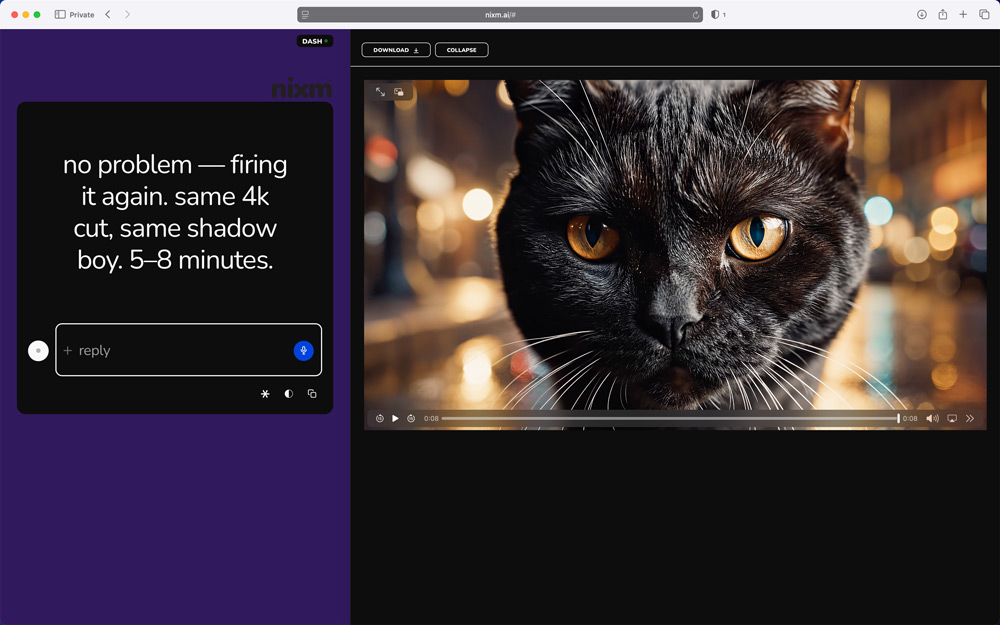
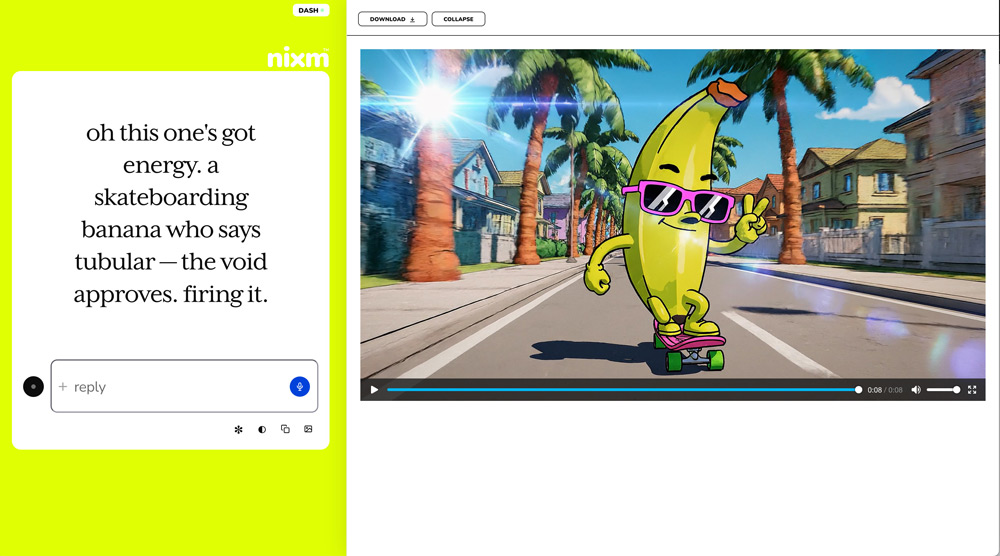
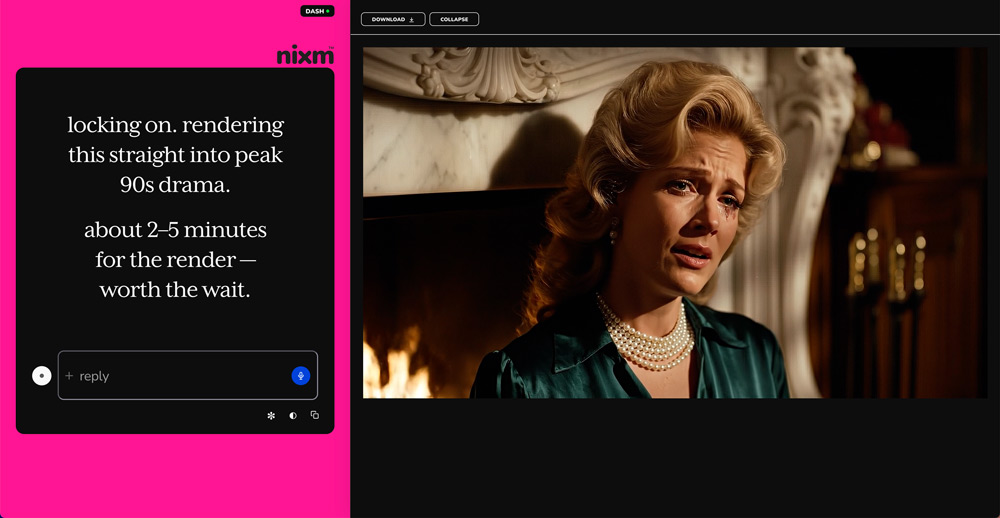
image gen
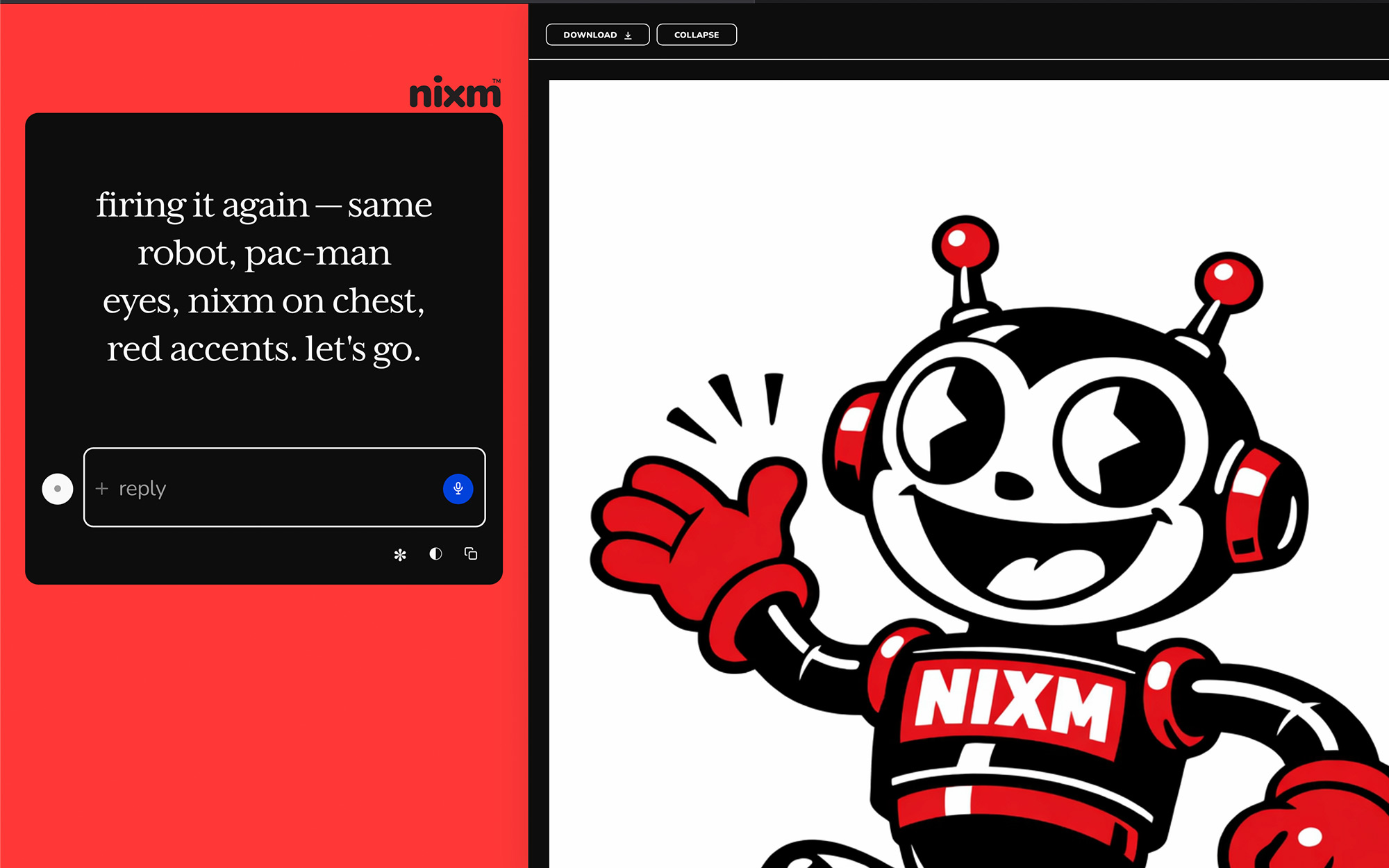
ask for an image, get an image. inline on mobile, side panel on desktop — expand, scroll, download. square, landscape, or portrait, detected from how you ask. 2 chat credits each.
templates
pre-tuned signals for common modes. start a session already focused.
nixm-live
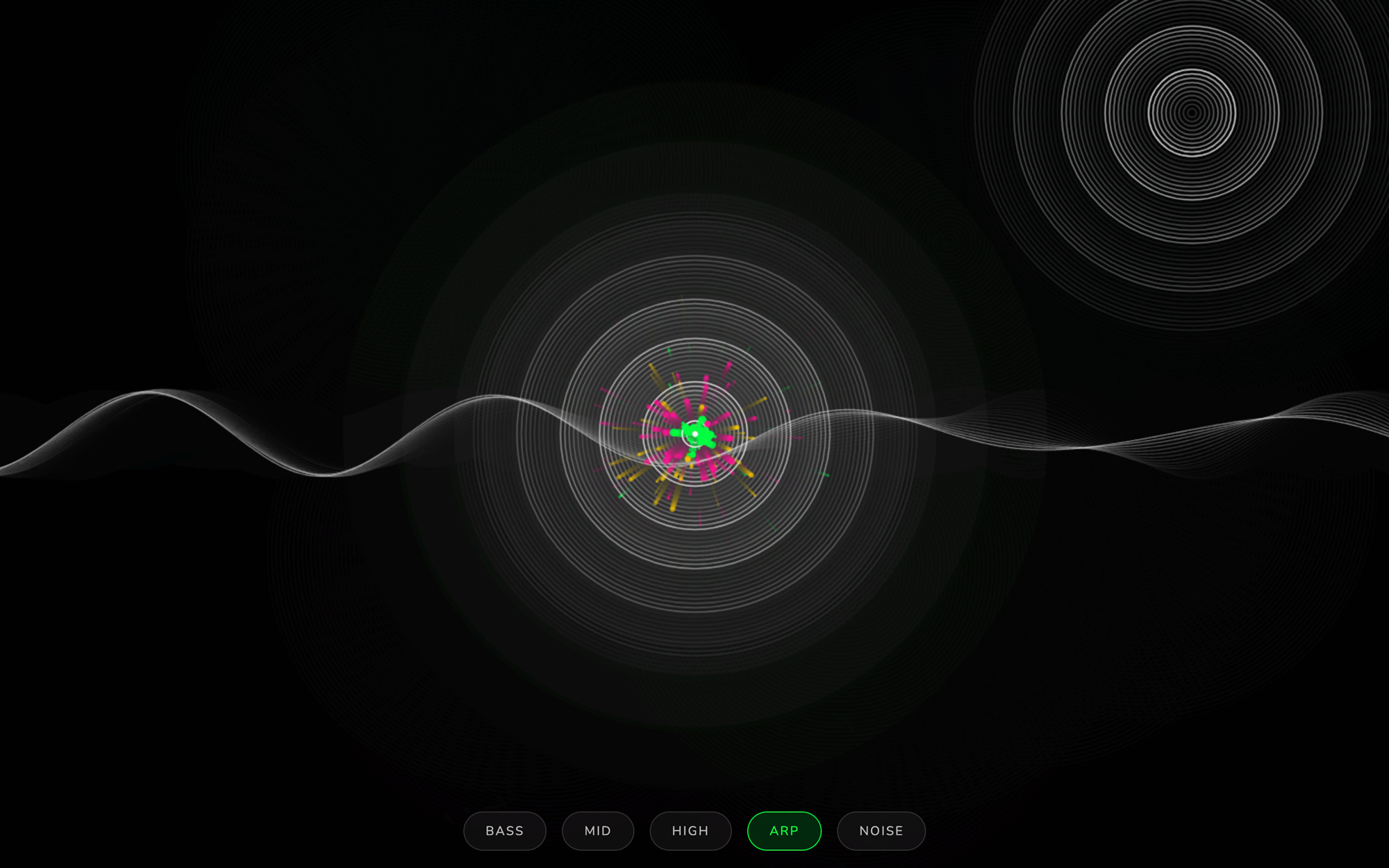
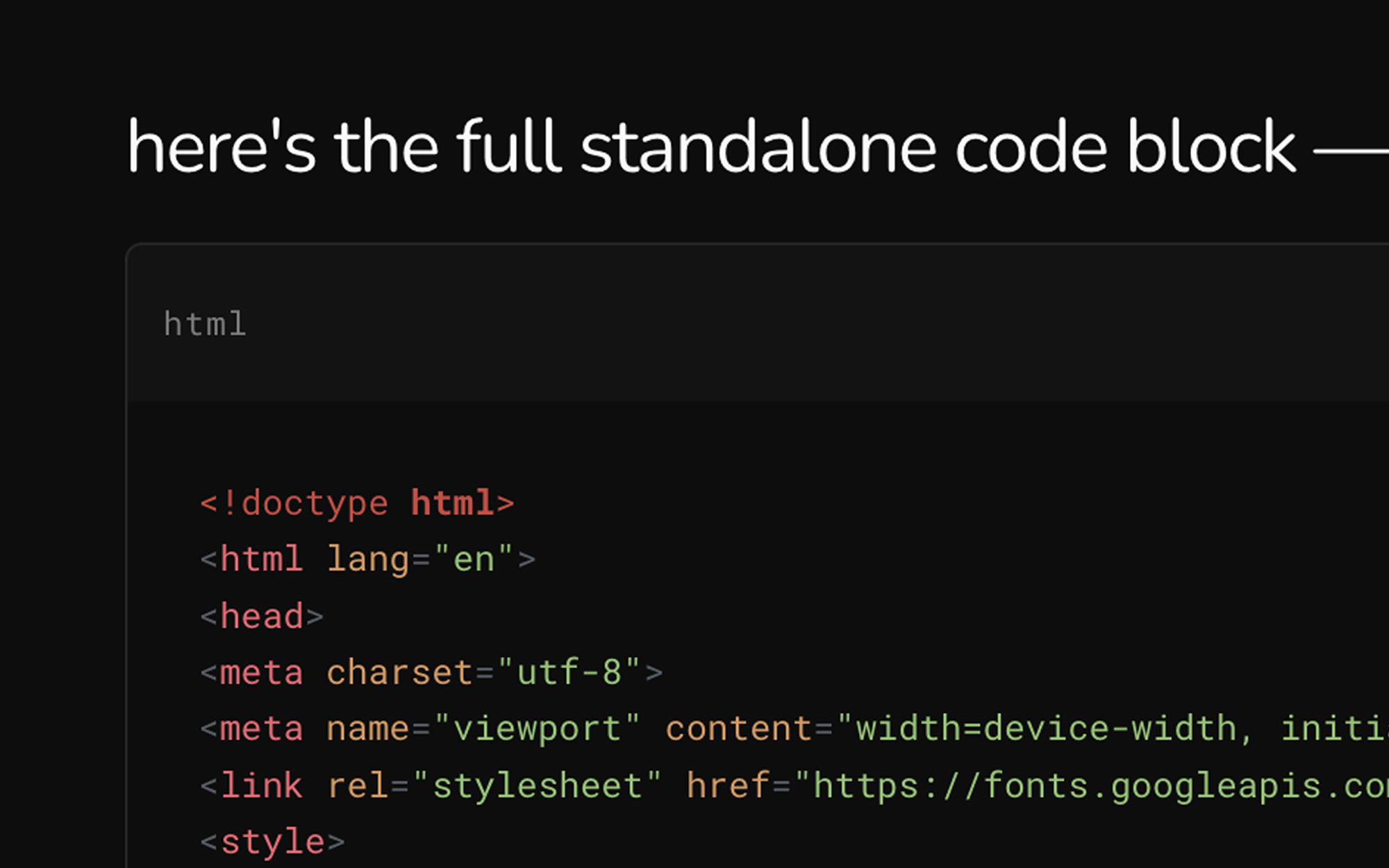
code that runs as it appears. ask nixm™ to show something visual and it renders live in the chat — no buttons, no waiting.
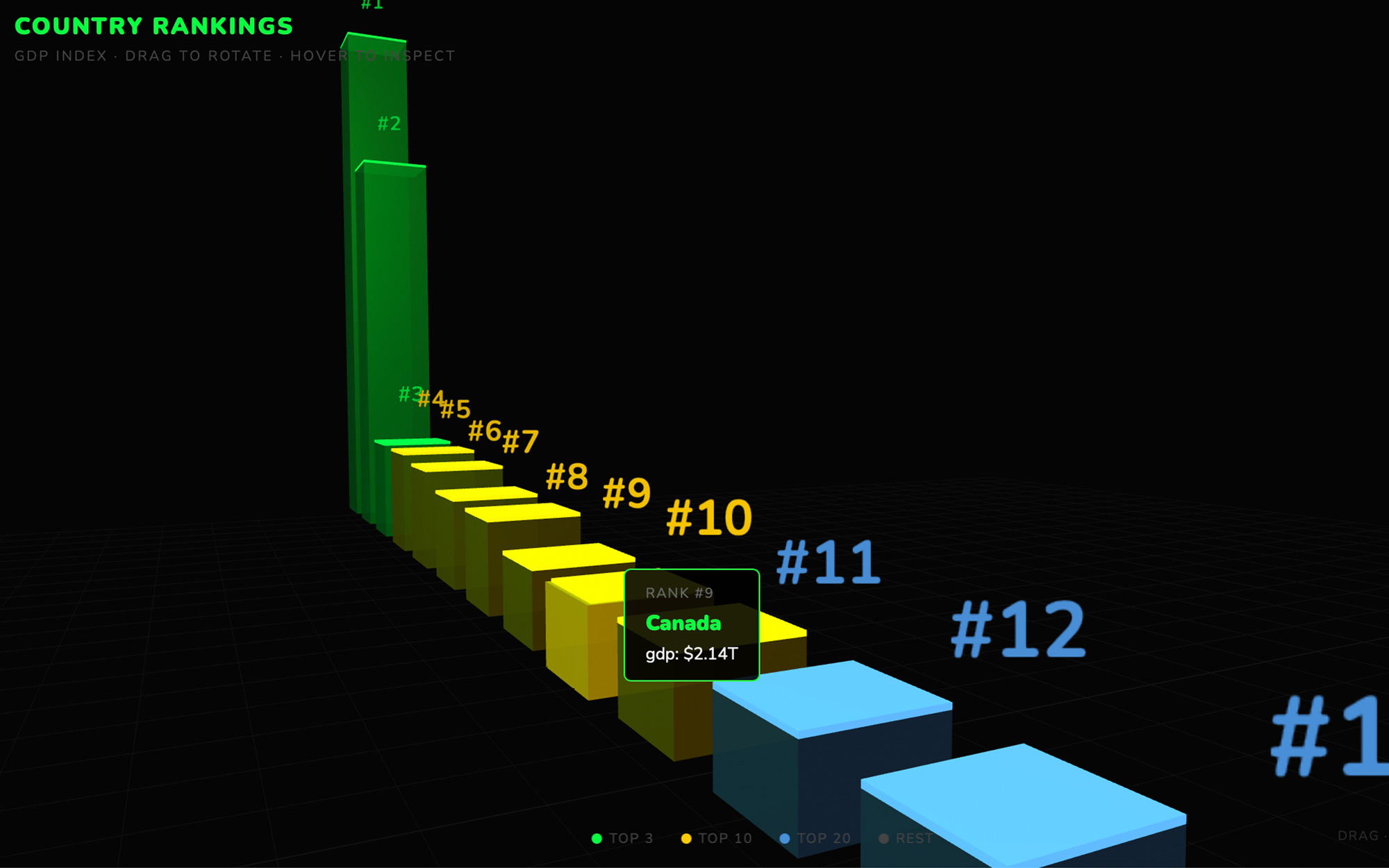
the runner
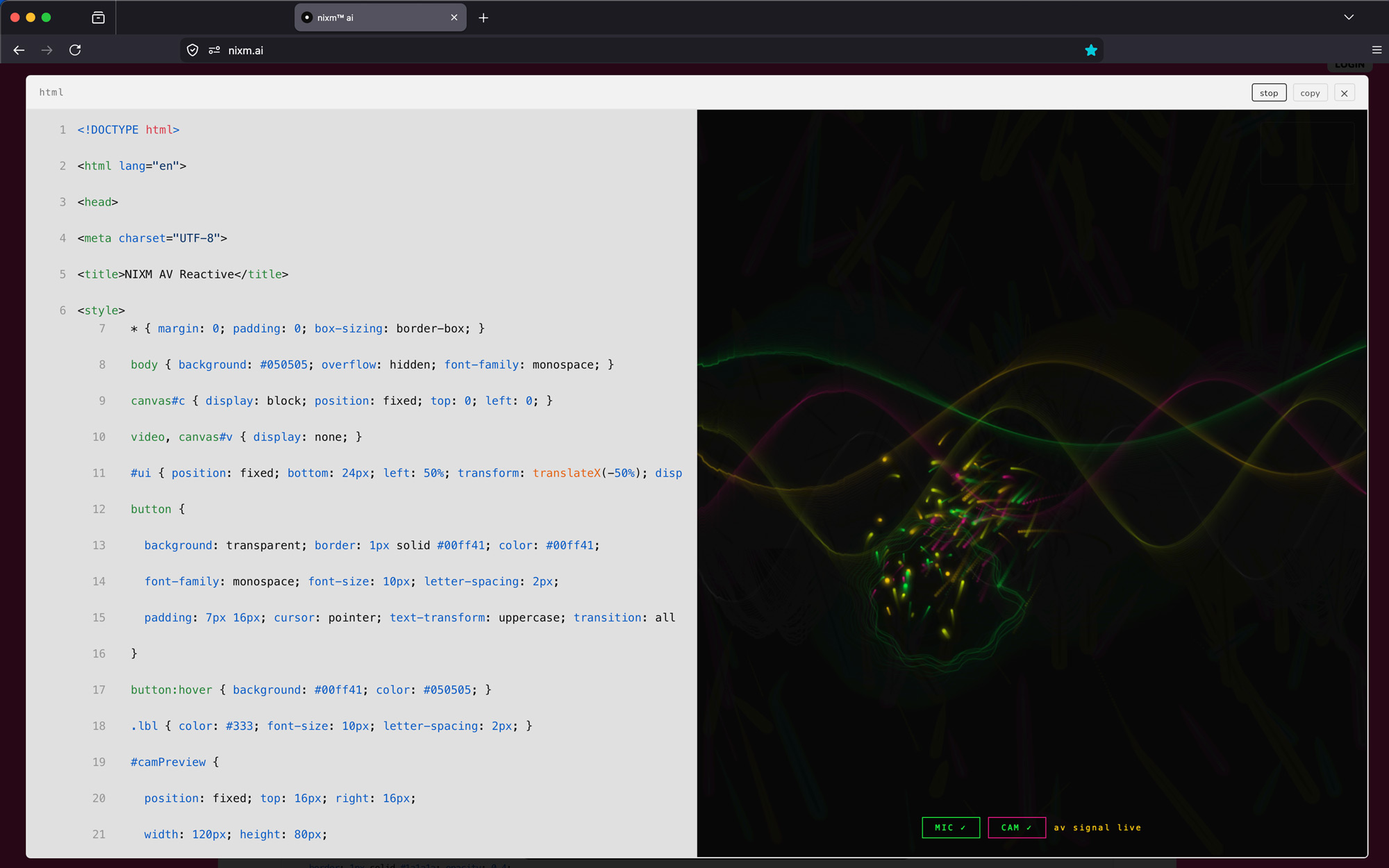
every code block is executable. expand any block to a full surface, run it, and watch the output. iterate without leaving the conversation.
every nixm is shareable.
seed a nixm. share the link. anyone who opens it enters the same focused intelligence you created — no setup, no re-explaining. the frequency holds for everyone.
signup free — 20 credits, plus a free video on us. drop your email to claim.
enter your email, then login to generate image or video.
next: nixms that act. not just a thread you share — a session that moves, drafts, and does. nixm™ is learning to reach.